Natural World
An Exploration of Imagination, Spontaneity, and Discovery
Natural World began during my artist residency at the DuPage Children's Museum as a simple exercise to amuse myself through drawing.
Without sketches or predetermined compositions, lines gradually developed into imaginary creatures, unexpected shapes, and intricate patterns. Each new mark influenced the next, allowing the artwork to evolve through observation, intuition, and constant decision making.
What appears playful and spontaneous requires careful judgment. The challenge is to recognize possibilities, respond to unexpected discoveries, and maintain a sense of balance without losing the freedom of exploration.
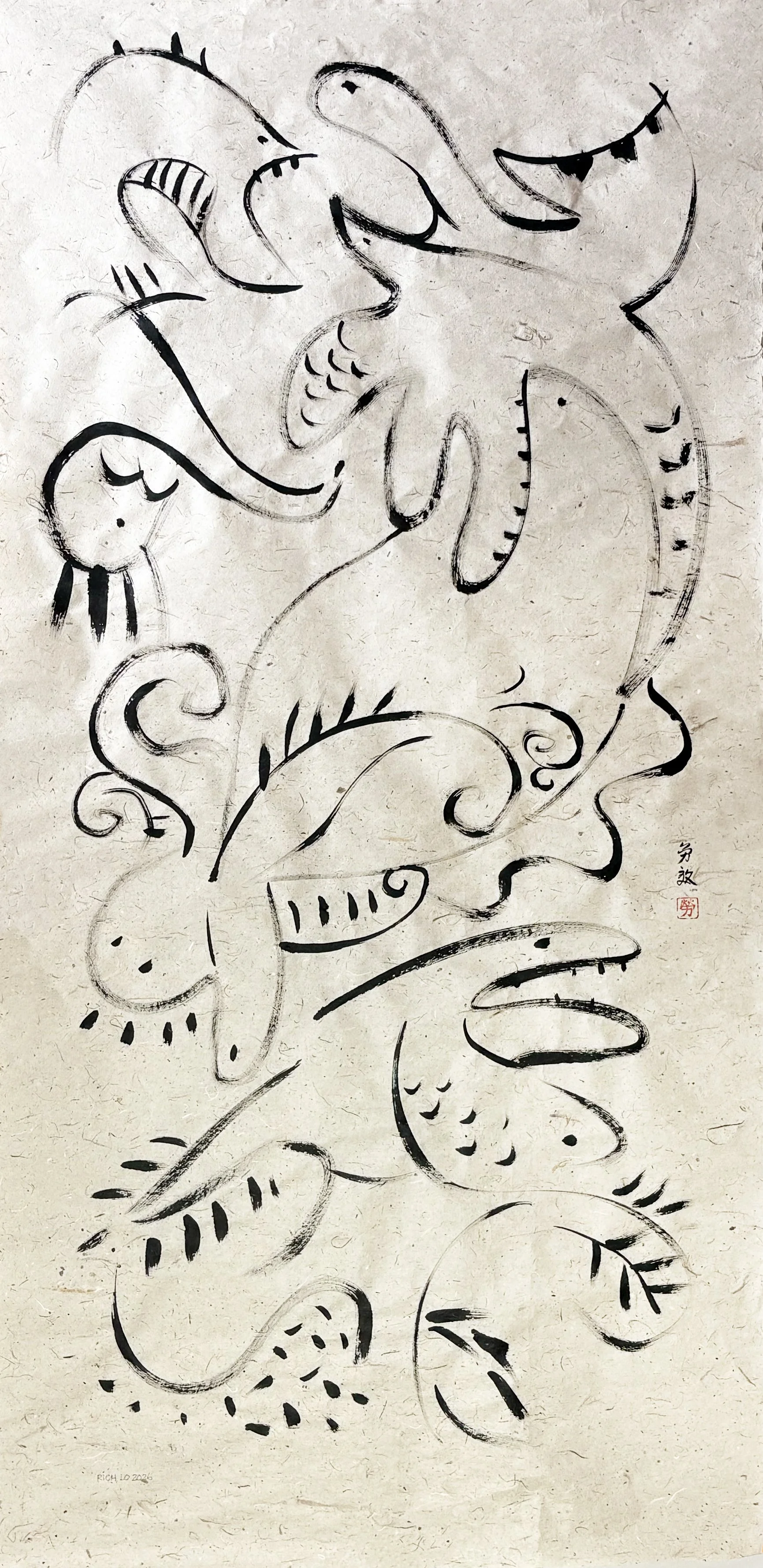
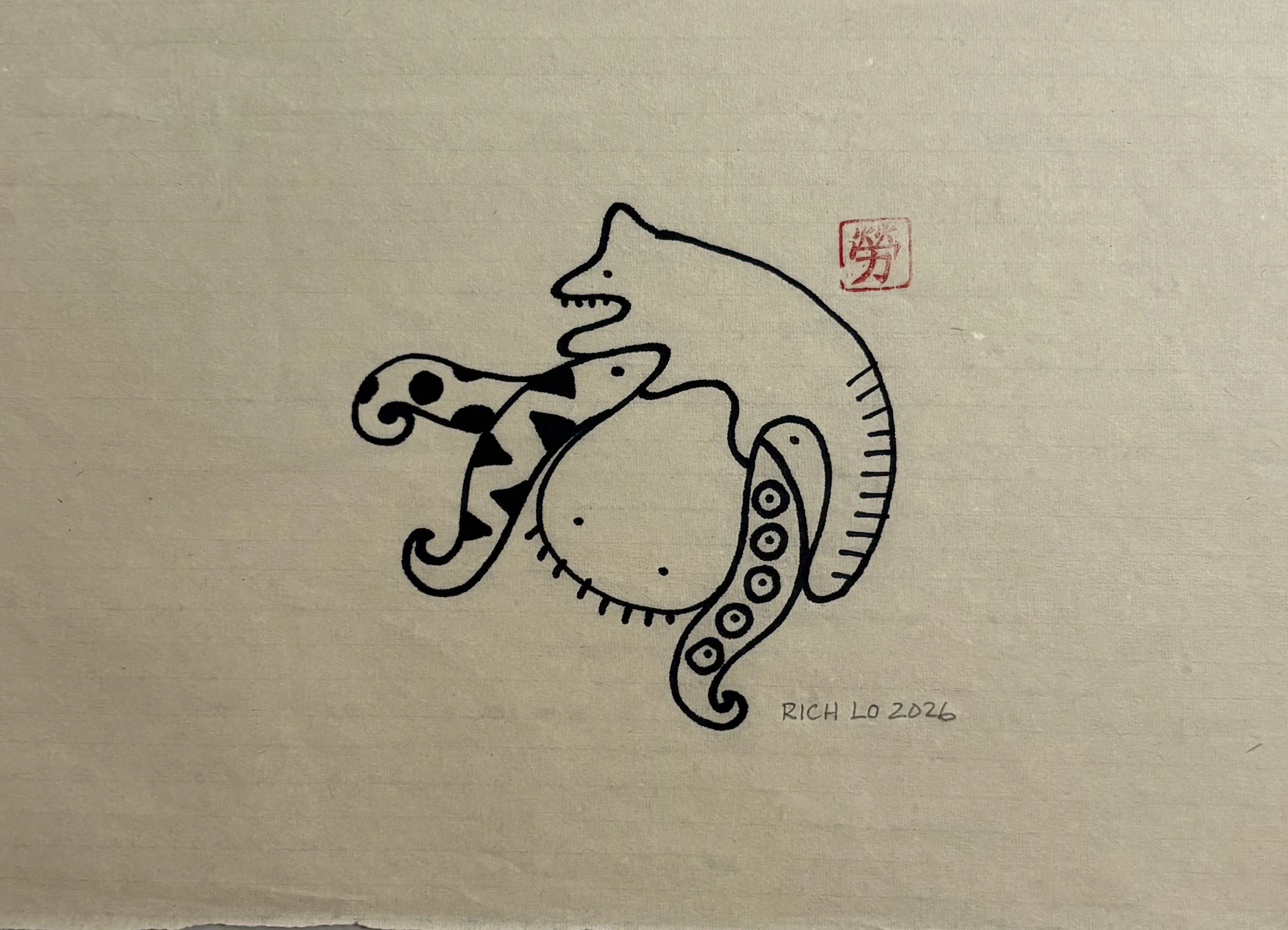
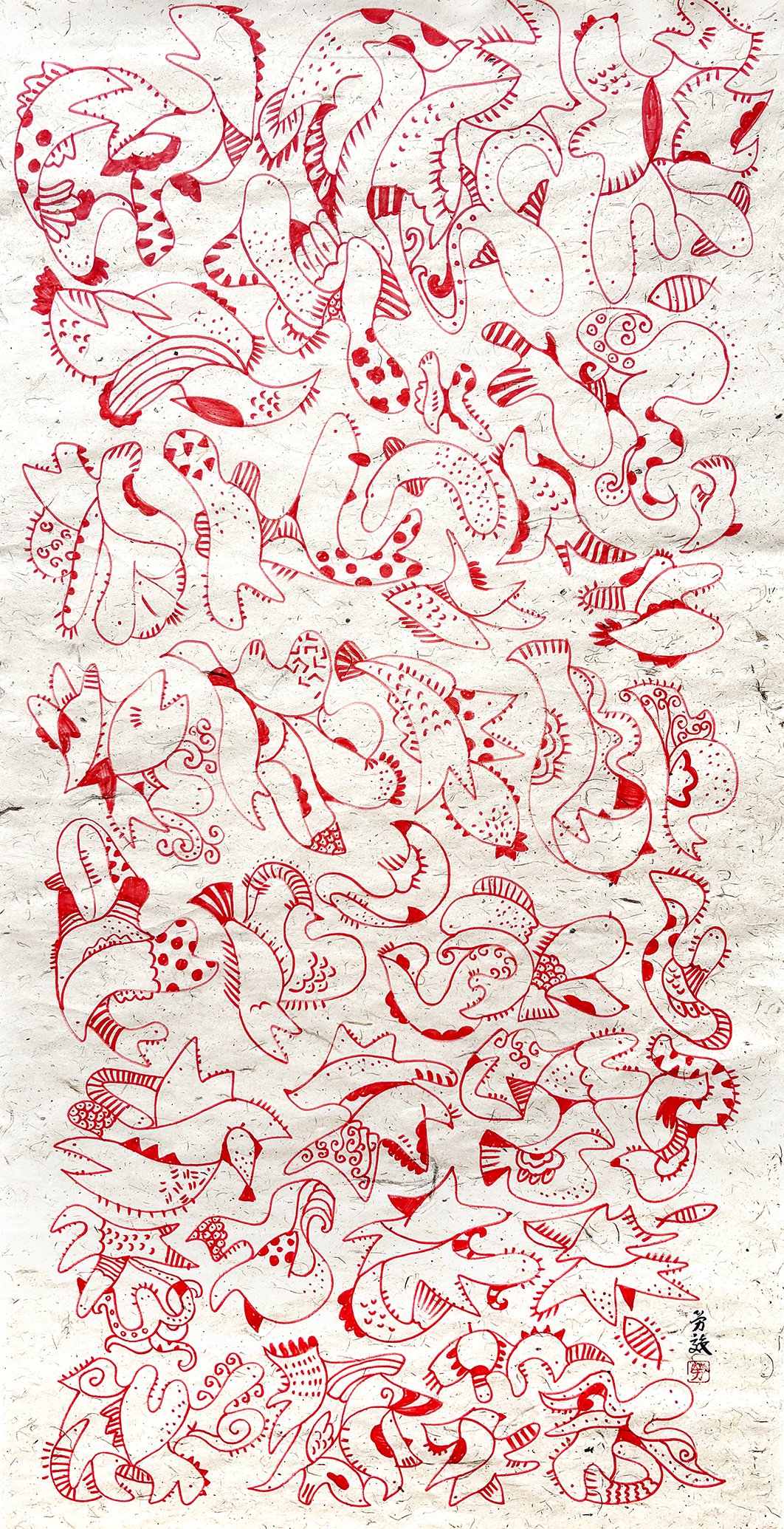
The series has evolved from smaller drawings on cardboard to larger works on mulberry paper. Some compositions are dense and intricate, while others use broader marks and open spaces.
Natural World continues to explore the relationship between instinct, critical thinking, and the unpredictable nature of creation.
Discovery
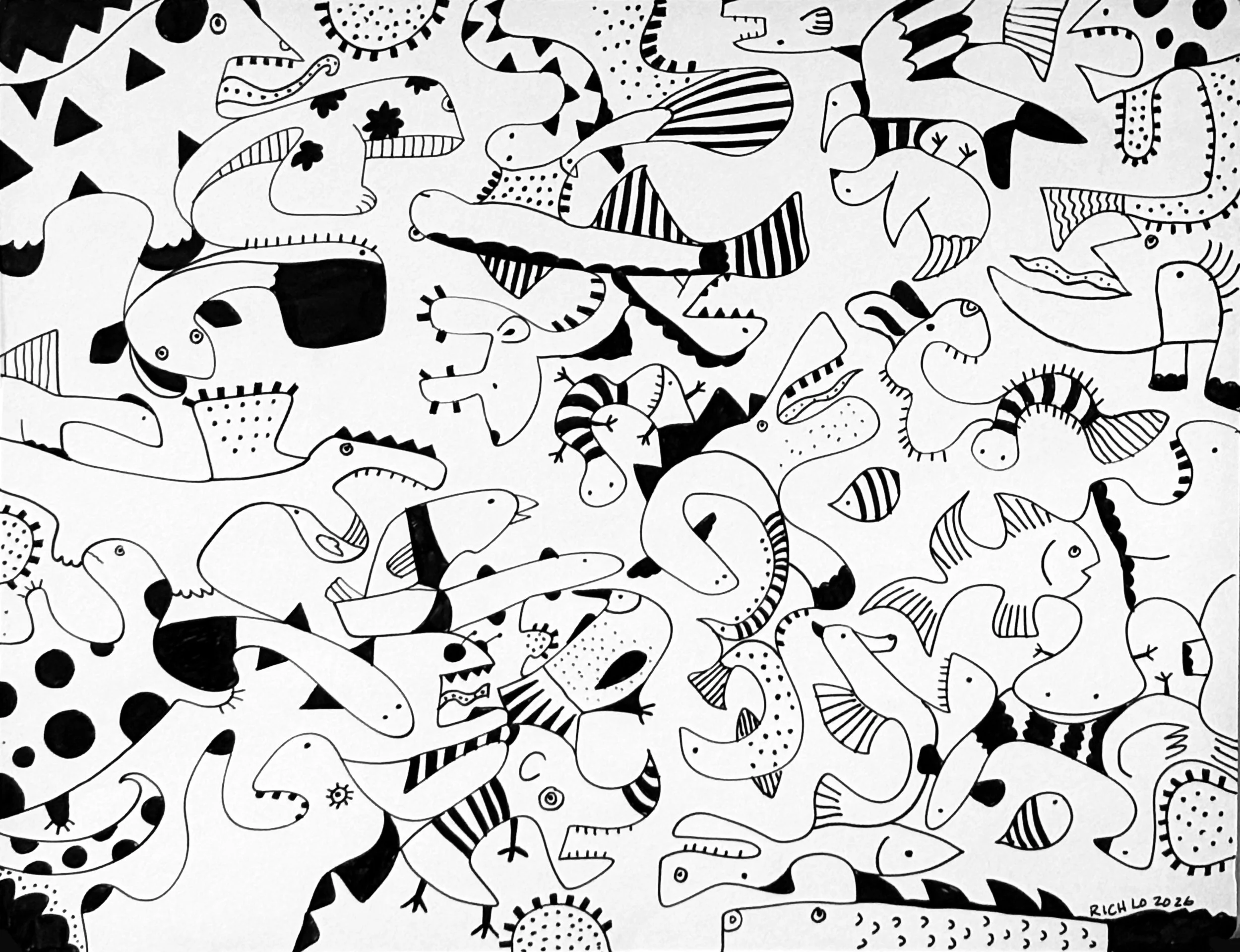
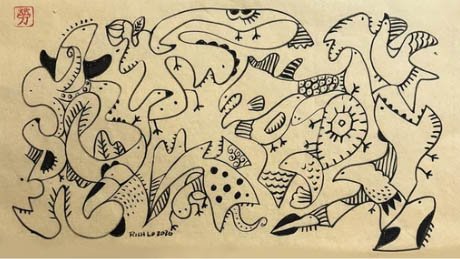
The earliest Natural World drawings began as a simple experiment.
Without planning the composition, lines developed into imagined creatures. Familiar shapes appeared, changed, and connected with others.
There was no need to explain or identify what was being created. The pleasure came from discovering what might happen next.
The process established the foundation for an ongoing series.
Complexity
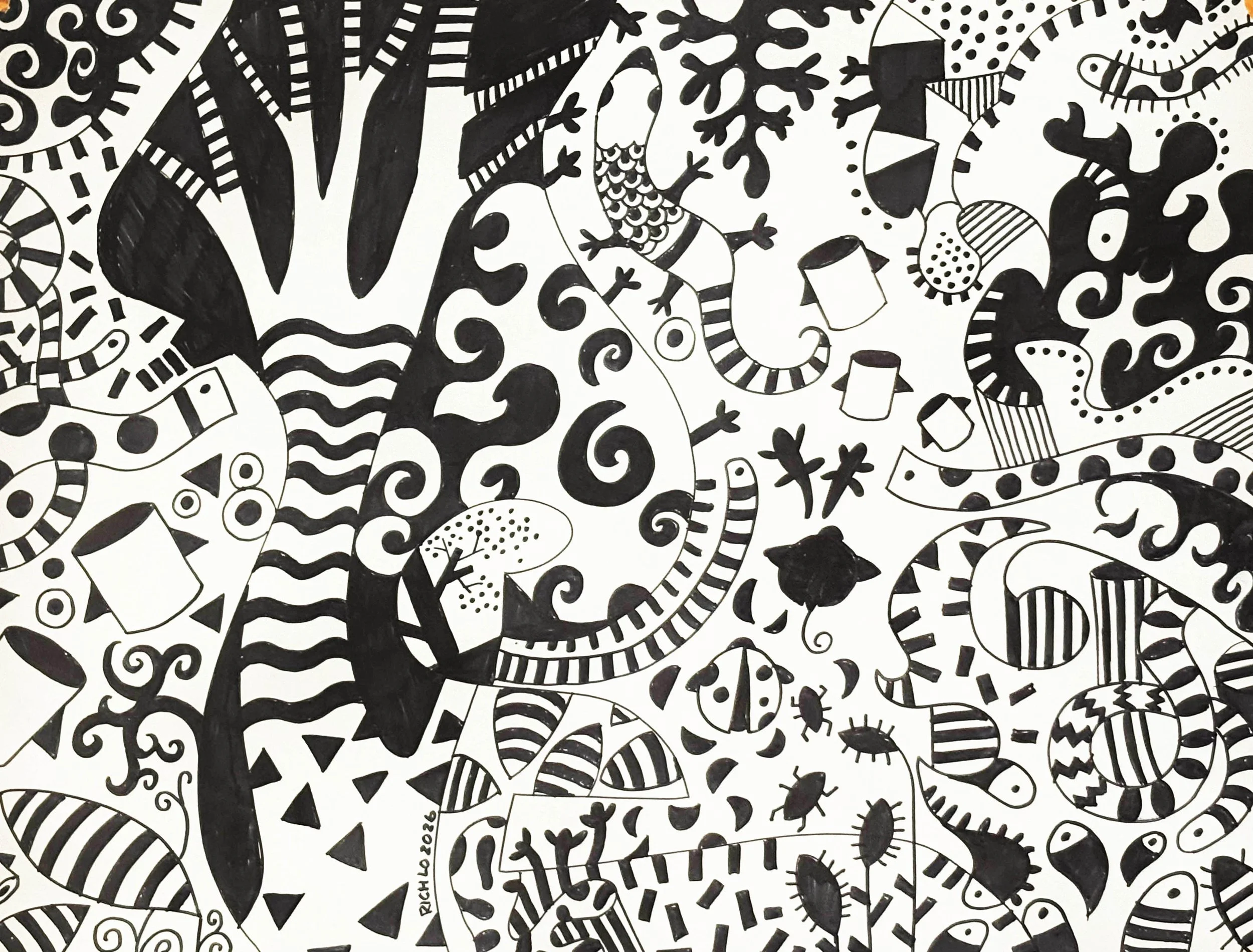
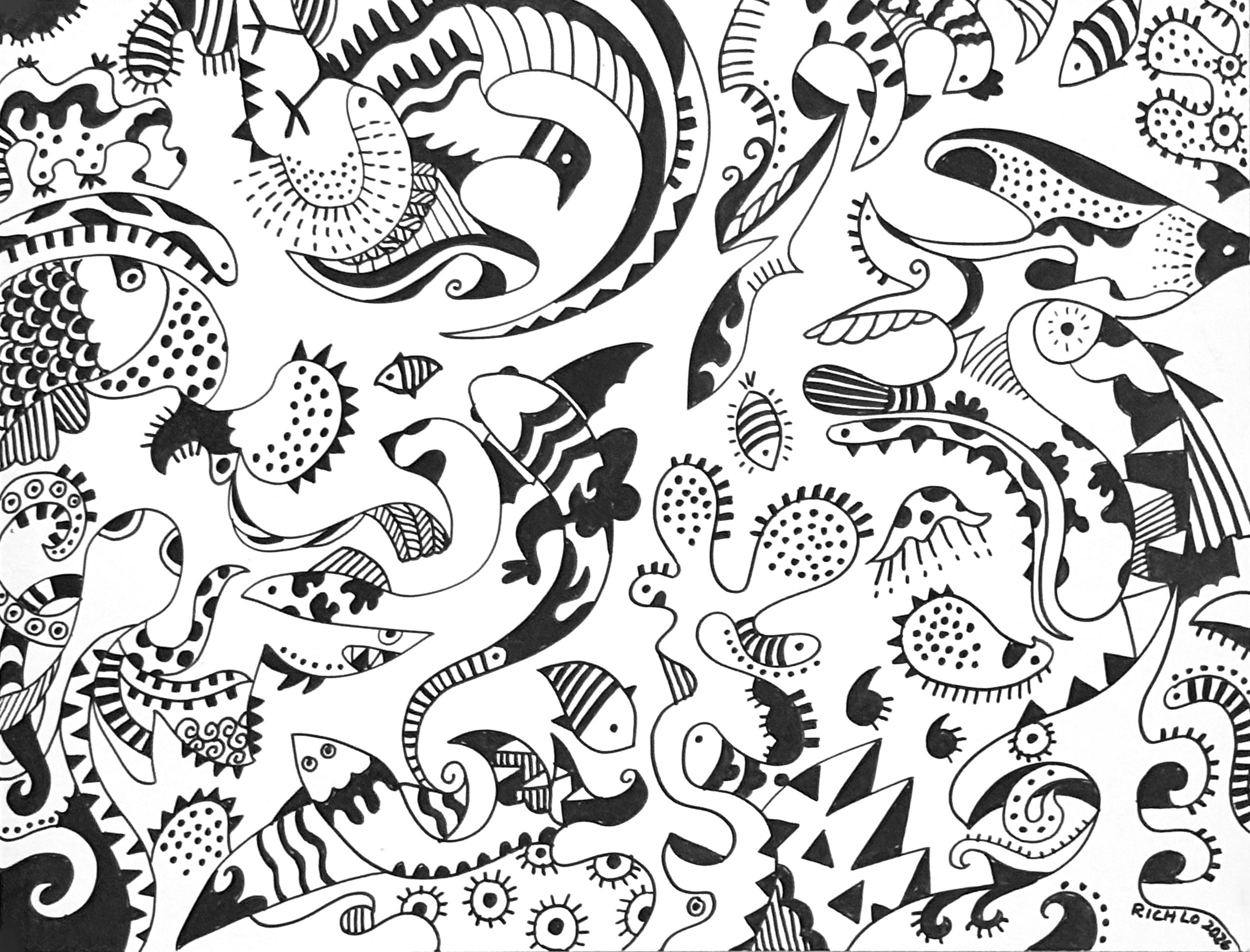
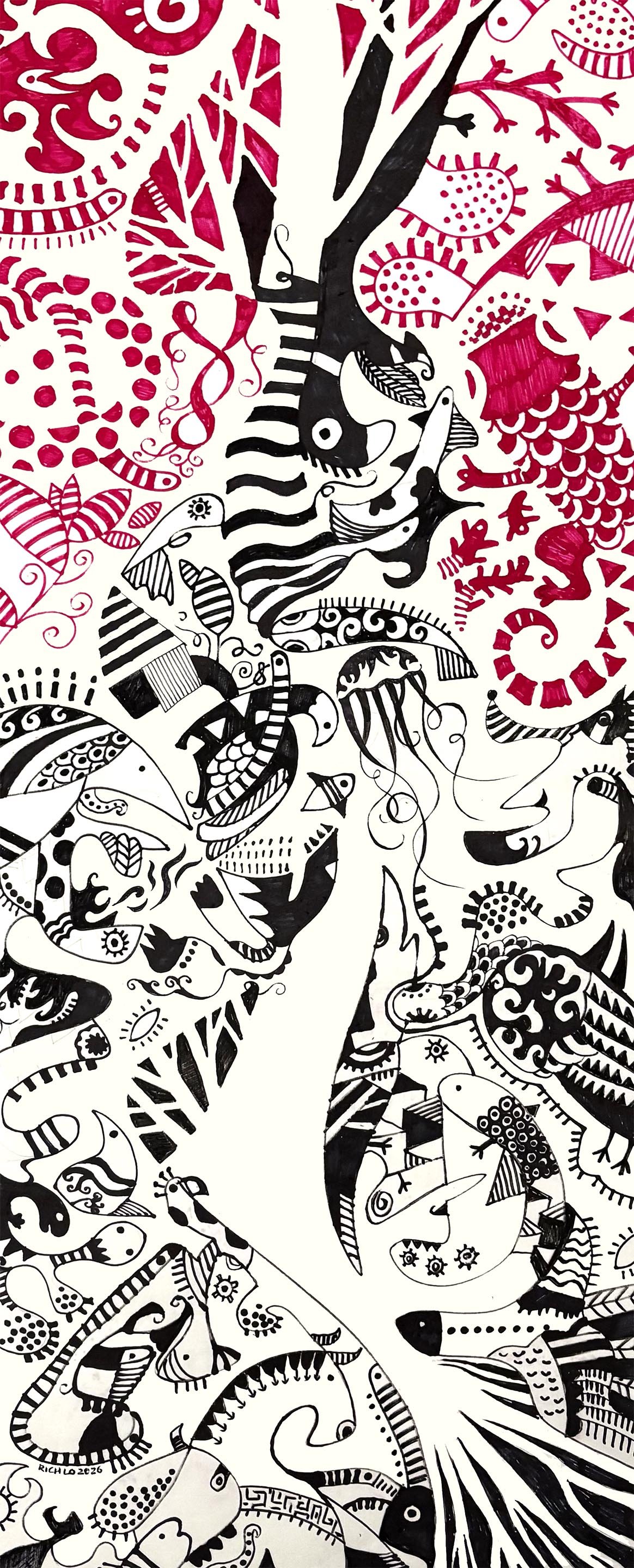
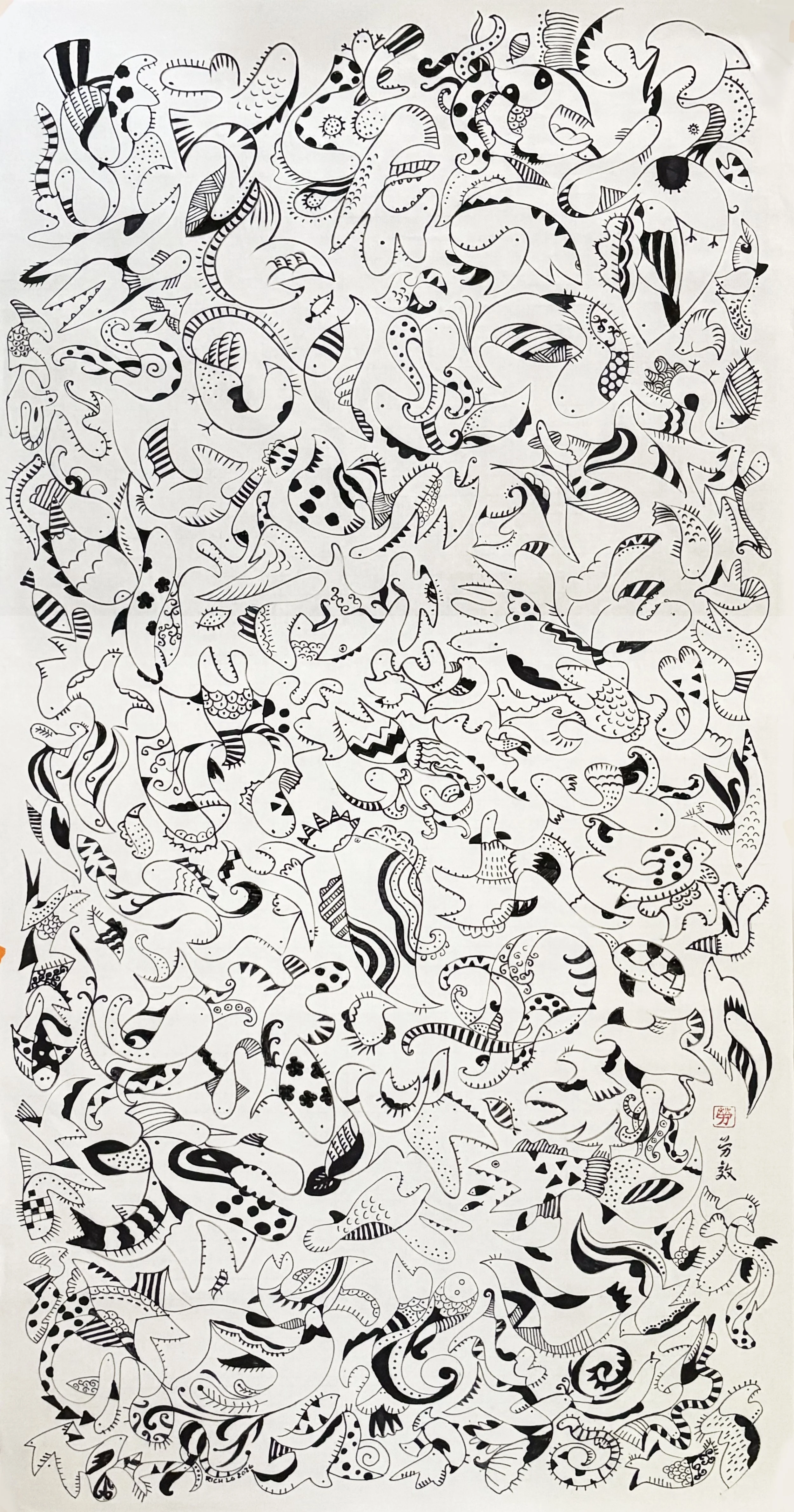
As Natural World developed, individual creatures began to occupy increasingly crowded compositions.
Patterns, curves, stripes, and solid black shapes created relationships between the figures. Finding room for another creature became part of the challenge.
The drawings require a balance between spontaneity and careful judgment. Every new element changes the surrounding composition.
The apparent disorder gradually develops its own visual rhythm.
Freedom of Space
The most recent work explores a different approach.
Larger brushstrokes, fewer creatures, and more open spaces allow individual lines to become more important.
The drawings remain spontaneous, but the relationship between each mark and the empty paper becomes increasingly significant.