Gold Mountain
A Personal Lens on Chinese American History
This four-part series explores my immigrant journey and path to success in America, deeply intertwined with the vibrant history of Chicago’s Chinatown. Through these works, I offer a blend of historical narrative, heartfelt tribute, and personal reflection on what it means to build a life in a new land.
The term "Gold Mountain" (金山, Jīnshān) was a name used by Chinese immigrants, particularly in the 19th and early 20th centuries, to refer to America, especially California. It originated during the California Gold Rush (1848–1855) when thousands of Chinese migrants traveled to the U.S. in search of wealth and better opportunities. A Symbol of Opportunity – For many Chinese laborers, America seemed like a land of great fortune, where hard work could lead to wealth and success. The idea of striking gold and achieving prosperity was highly appealing, especially given the poverty and turmoil in China at the time.
Section 1: Exclusion
This segment explores the deep roots of Asian hate in America, a legacy of racism that continues to affect my life on a daily basis. In order to tell the whole story, I have to visit the history.
In the spring of 1882, Congress passed the Chinese Exclusion Act, signed into law by President Chester A. Arthur. This landmark legislation was the first of its kind in U.S. history, imposing a ten-year ban on Chinese laborers seeking to immigrate to the United States. For the first time, federal law explicitly targeted an entire ethnic group, driven by the belief that Chinese immigrants posed a threat to the economic and social fabric of certain communities. It was a legal declaration that Chinese people were not welcome, seen as undesirable outsiders—an impression that would persist for generations.
The act’s reach deepened in 1902 when it was made permanent, with even harsher restrictions. Chinese residents were forced to register with the government and carry certificates of residence, facing the constant threat of deportation if they could not produce proper documentation. These measures weren’t just laws; they were tools of exclusion, institutionalizing racism and fostering resentment. For decades, they created a climate of hostility and isolation for Chinese Americans, leaving scars that would stretch far beyond the laws themselves.
It wasn’t until 1943, with the passage of the Magnuson Act, that the Chinese Exclusion Act was finally repealed. The law allowed a small number of Chinese immigrants to enter the U.S. each year, but the damage had already been done. The racial prejudice embedded by the Exclusion Act, and its long history of legal discrimination, continued to reverberate across generations. The echoes of that hatred still resonate today, shaping the experiences of Asian Americans and perpetuating the biases that many of us face daily.
This history isn’t just in the past—it’s part of the present, woven into the fabric of American society, and its impact on the lives of Asian Americans, myself included, is undeniable.
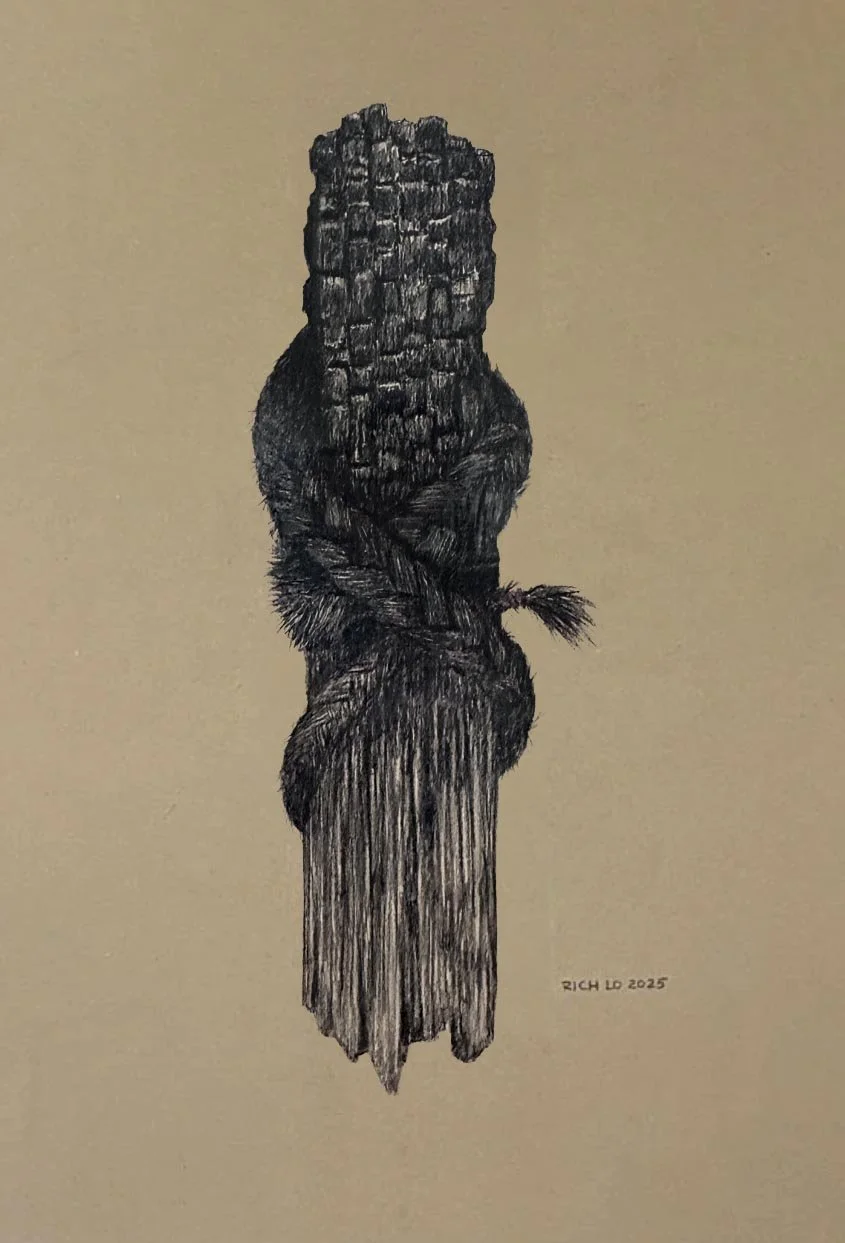
Pigtail Series 1
In the Pigtail Series, I use the queue as a recurring visual metaphor for vulnerability, coercion, and violence.
Medium: Charcoal on kraft paper. Dimensions: 24” X 36”
San Francisco officials thought that enforcing the Pigtail Ordinance, which threatened to cut off the long, braided ponytails of Chinese immigrants, would deter overcrowding in jails and discourage further Chinese immigration to the United States, driven by anti-Chinese sentiments.
Furthermore, this would have significantly affected Chinese immigrants, as keeping their queue was the only way to secure their chance of returning to China.

Pigtail Series 2
Medium: Charcoal on kraft paper. Dimensions: 24” X 36”
The Chinese Exclusion Act, enacted on May 6, 1882, stands as a landmark in U.S. immigration history as the initial significant measure to restrict immigration. Primarily targeting Chinese immigrants, especially in California, it also rendered them ineligible for naturalization. Chinese immigrants faced harsher treatment compared to any other voluntarily arriving group in the United States.

Pigtail Series 3
Medium: Charcoal on kraft paper. Dimensions: 24” X 36”

On October 24, 1871, a mob in Los Angeles killed seventeen Chinese men and boys. The massacre became one of the starkest examples of the anti-Chinese violence that preceded federal exclusion.
Pigtail Series 4
Medium: Charcoal on kraft paper. Dimensions: 24” X 36”
The Chinese Exclusion Act of 1882 was a federal law that barred Chinese laborers from immigrating to the United States for a decade. This was the first federal legislation to specifically restrict entry based on ethnicity, under the premise that Chinese laborers posed a threat to the social order in certain areas. Additionally, the Act rendered Chinese immigrants permanent aliens by denying them the possibility of U.S. citizenship and imposed severe penalties, including deportation and imprisonment, on those who violated its terms.

Pigtail Series 5
Medium: Charcoal on kraft paper. Dimensions: 24” X 36”

Nineteenth-century anti-Chinese campaigns often portrayed Chinese immigrants as threats to public health and morality, arguments that contributed to a broader climate of exclusion.
Pigtail Series 6
Medium: Charcoal on kraft paper. Dimensions: 24” X 36”
Chinese immigrants were prohibited from obtaining U.S. citizenship under the Chinese Exclusion Act of 1882, which also barred further immigration. As a result, many railroad workers were unable to reunite with their families.

Pigtail Series 7
Medium: Charcoal on kraft paper. Dimensions: 24” X 36”
Widespread anti-Chinese hostility, riots, and exclusion campaigns fueled by intense racial hatred and economic resentment, reflecting the hostility faced by Chinese immigrants throughout this era.
Flag Series: The Act
Medium: Glued paper, oil on wood. Dimensions: 24” X 24”
The Chinese Exclusion Act is not only a Chinese story but an American story.

Section 2: Chicago’s Chinatown
Despite facing significant hardships, Chinese Americans gradually became more self-sufficient and began to establish themselves in urban areas. They sought employment in a range of service industries and started to form their own communities, which eventually led to the creation of vibrant “Chinatowns” across the country.
Chicago’s Chinatown was a vibrant place for me in the 1960’s and 1970’s. There are also some memorable times that made growing up so special. We knew everybody. Chinatown’s boundaries were from Cermak to 24th street and from Wentworth to Canal Street. We played sports on concrete and it seemed everybody went to St Therese grammar school. I still have friends in Chinatown from that era. It was also a period where I came of age with real struggles.
Today, I still call Chinatown home even though I have not lived here full time for 40 years. Chinatown is about community, culture and traditions. I love it here, the smell of stirfries, the sight of people conversing in person instead of on their phones and especially running into old friends on the streets. Going to the bakery and getting a char sui bao is a ritual I still keep every time I visit Chinatown.
On Leung Tong
Medium: Ink on paper. Dimensions: 13” X 18”
Chinatown in the 1960s was a vibrant neighborhood located on the South Side of Chicago, primarily along South Wentworth Avenue between Cermak Road and West 26th Street. It stands as one of the largest and most significant Chinese-American communities in the United States.

Won Kow
Medium: Ink on paper. Dimensions: 13” X 18”
Won Kow, the oldest restaurant in Chicago’s Chinatown, has closed its doors after nearly 90 years of serving the community. For many, it holds special memories — including the St. Therese Class of '72, who gathered there for reunions. David Hoy, the restaurant owner’s nephew, is also one of our classmates, adding a personal connection to the iconic establishment.

Sunday
Medium: Ink on paper. Dimensions: 9” X 15”
Sunday in Chicago’s Chinatown is the most bustling day of the week. People come to shop and eat at the restaurants.

Boxed In
Medium: Ink stamps on paper. Dimensions: 15” X 20”
In the 1960s, Chinatown spanned an area of roughly four blocks by four blocks. Despite its small size, it created a tightly-knit community where everyone lived in close proximity, creating a strong sense of connection and belonging.

Chinese Kitchen
Medium: Ink on paper. Dimensions: 9” X 12”
In the 1960s, there are fews jobs for immigrants

Soup Man
Medium: Oil on canvas. Dimensions: 24” X 30”
Immigrants working in Chinatown often faced bullying from insensitive restaurant owners. The labor was both physically demanding and mentally exhausting.

People of Chinatown Series: Mrs Moy
Medium: Oil pastel and ink on paper. Dimensions: 10” X 13”
The women of Chinatown embody resilience and strength as they navigate the hardships of immigrant life. Their determination and courage in the face of adversity are testaments to their unwavering spirit and deep sense of community.

People of Chinatown Series: Mrs Jeng
Medium: Oil pastel and ink on paper. Dimensions: 12” X 12”
I first met her in 2016 at my parents' apartment shortly after my mother passed away. She had been one of my mother's regular mahjong partners, playing together every day. It was clear to me that she was deeply saddened by the loss.

People of Chinatown Series: Beesch
Medium: Oil pastel and ink on paper. Dimensions: 12” X 12”
She was my classmate at St. Therese, Class of 1972. A kind yet resilient woman. I admired her strength. She is, and always will be, a friend for life.

Flag Series: Success
Medium: Oil and glued paper on wood. Dimensions: 24” X 24”
The success of Chinese Americans is attributed to the values the community cultivates and passes down through generations. A strong emphasis on education and hard work forms the foundation of this deeply established value system, which originates within the family and extends to every aspect of life.

Yum Cha
Medium: Ink on paper. Dimensions: 10.5” X 13.5
Chinese cuisine has woven itself into the fabric of American life, with Chinese restaurants flourishing in both small towns and large cities nationwide. These establishments not only offer delicious and diverse meals but also serve as crucial support centers for working Chinese immigrants. Dim sum traces its origins to Cantonese cuisine from Southern China, with a rich history spanning over a thousand years. Originally served as a simple snack or light meal for travelers along the Silk Road, it gradually evolved into a beloved centerpiece of Cantonese dining culture.

Paris Baguette
Medium: Ink on paper. Dimensions: 11” X 15”
Today, only reminiscence remains of the Chinatown I once knew. New businesses have taken root, catering to the tastes and needs of a younger generation.

Segment 3: Life I Know
Growing up in Chicago’s Chinatown during the 1960s and 70s was challenging. With our parents busy trying to survive, my siblings and I often had to fend for ourselves. Racism was a harsh reality, and I faced violence from various groups; Italians, Blacks, Latinos, and even other Chinese. During those turbulent years, I fell in with negative influences from immigrants out of New York City’s Chinese community and found myself drifting aimlessly. A turning point came after I was indirectly involved in a shooting in Chinatown. This incident served as a wake-up call, leading me to pursue a college education at Eastern University, a decision that ultimately saved my life.

Lion Dance
Medium: Oil on canvas. Dimensions: 48” X 38”
Chinese New Year along with other celebrations, which have grown to become major cultural events embraced by Americans of all backgrounds, highlight the rich blending of cultures and the shared joy of diverse traditions. Through these festivities, Chinese Americans celebrate their heritage while also fostering a broader cultural exchange that enriches the American way of life. The Lion Dance not only honors cultural heritage but also reinforces the values of resilience and community spirit. I performed lion dance from age 16-20.

Flag Series: Being American
Medium: Collage, photo, oil on wood. Dimensions: 24” X 24”
Being American is all I've ever known.

1972
Medium: Oil, acrylic on canvas. Dimensions: 60” X 50”
As an eight grader, I was impressed with a group of older kids from NYC. They were tough and stylish. My real life is that I was helping out at the family restaurant. Uninspiring and dirty. The 2 paths never meet. A red lucky money envelope stands for lost opportunities. I did not have a normal childhood.

Lost
Medium: Oil, acrylic on canvas. Dimensions: 72” X 60”
Some immigrants became lost while searching for hope, opportunities and prosperity.

Gold Mountain
Medium: Collage. Dimensions: 22” X 28”
The term gold mountain in modern times means "Symbol of Opportunity and wealth". "Gold Mountain" promise often proved hollow: instead of easy wealth, immigrants found exploitation, exclusion, backbreaking labor, racism.

Wok Hay
Medium: Oil, glued paper on canvas. Dimensions: 40” X 50”
Wok Hay, often translated as “breath of the wok,” describes the distinctive character produced by high-heat stir-frying. By seventh grade, I was already working in the kitchen of my father’s restaurant at 103rd and State. The work connects that sensory memory with the responsibilities that entered my childhood early.

Distant Memories
Medium: Oil on canvas.
Dimensions: 34” X 45”
A Chinese immigrant experiences the bittersweet reflection of wondering about the paths they left behind and the lives they might have lived.
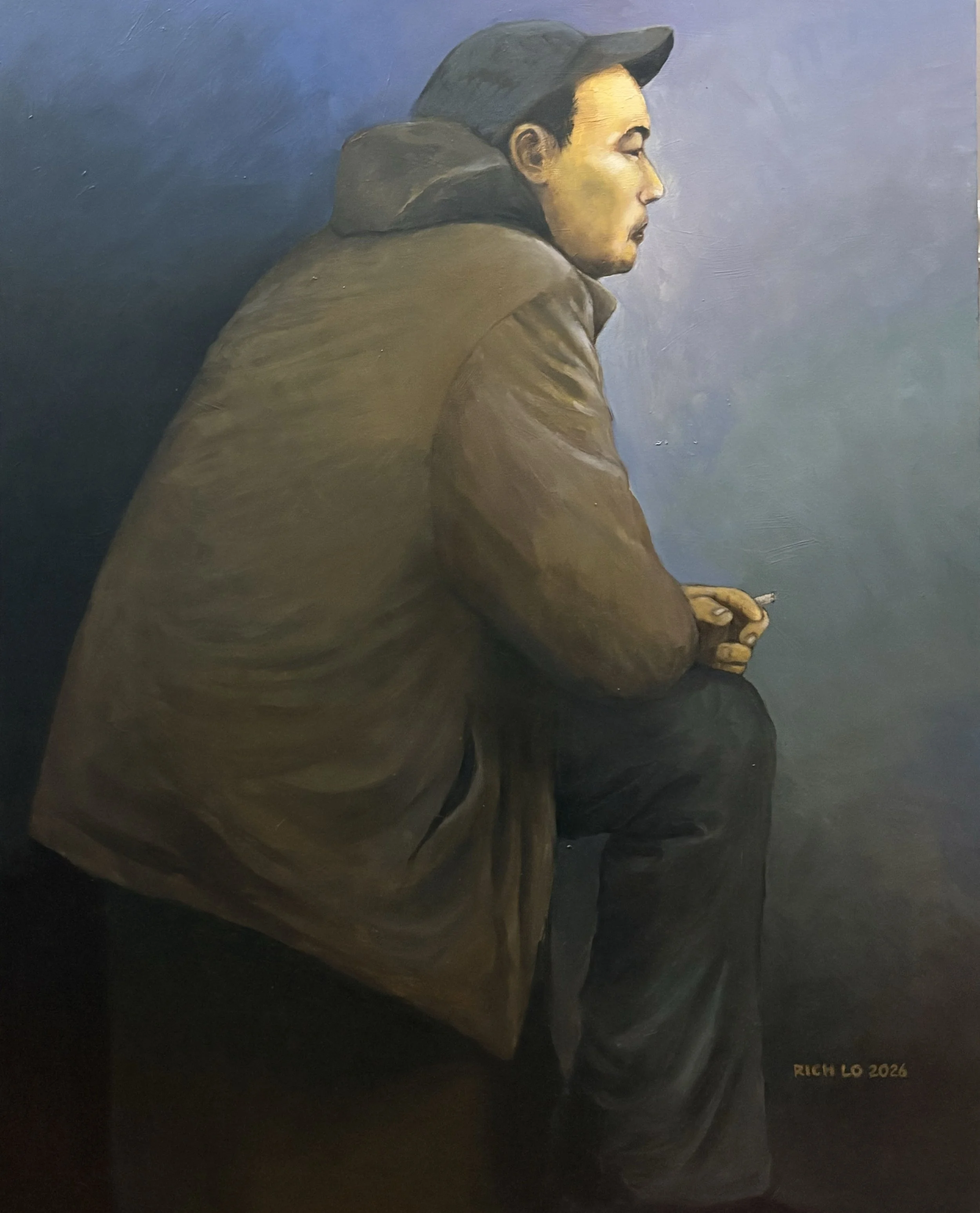
Injustice
Medium: Collage, photo, newspaper, ink, watercolor. Dimensions: 18” X 24”
On June 23, 1982, I was living in Chicago when I learned of Vincent Chin’s tragic death. He was brutally attacked in a racially motivated assault by two white men—Ronald Ebens, a supervisor at the Chrysler plant, and his stepson, Michael Nitz, a laid-off autoworker. Despite the clear racial animus behind the attack, Wayne County Circuit Court Judge Charles Kaufman sentenced Ebens and Nitz to only three years of probation and a $3,000 fine. Shockingly, neither man was sentenced to prison time.

Slanty
Medium: Collage, photo, cardboard, charcoal and ink. Dimensions: 18” X 24”
I was in third grade the first time I experienced it. My father and I were walking through downtown Chicago when it happened. He told me, "Ignore him and just keep walking." That was my first lesson in keeping our heads down.

Guan Gong
Medium: Oil on canvas. Dimensions: 40” X 50”
My parents, whose story is common among immigrants to America, came here for a better life, not necessarily for them, but for their children. Like many immigrants, they received little or no guidance in how to take advantage of the opportunities and freedom in this country. Father was a famous Chinese Opera composer and band leader, but lost it all when he stepped foot in America.
The Chinese Opera is an art form recognized by Chinese young and old. Guan Gong, a legendary warrior of the Chinese Opera, served under the warlord Liu Bei during the late Eastern Han dynasty of China.

Transition
Medium: Oil on canvas.
Dimensions: 46” X 70”
From immigrant to the new American born generation.
Segment 4: The Artist I’ve Become
My growth as an artist is inseparable from my evolving understanding of the Chinese American experience. The lives of immigrants in the 1960s and 1970s and the prosperity many Chinese Americans have achieved today represent different chapters of a shared history. Reflecting on these changes, I find myself asking what we carry forward—and what we risk forgetting—as our circumstances change.
I take pride in what our community has accomplished through education, hard work, and perseverance. At the same time, I am concerned about the distance that can develop between present-day success and the struggles that preceded it. As our circumstances and priorities change, those earlier experiences can become less visible. My work seeks to bring them into conversation with the present, exploring how economic advancement changes our sense of identity and our relationship to those who came before us.
Yet prosperity does not settle the question of belonging. Chinese Americans can achieve professional recognition and financial security and still be regarded as foreigners in the country they call home. This tension has deepened my understanding of the stories I want to tell: stories in which achievement and exclusion coexist, and in which building a life in America does not necessarily mean being fully accepted as part of it.
The artist I have become seeks to connect these experiences across generations. Through my work, I honor the journey that has brought us here while asking how its history continues to shape our lives. I want to acknowledge how far we have come without treating that journey as complete.

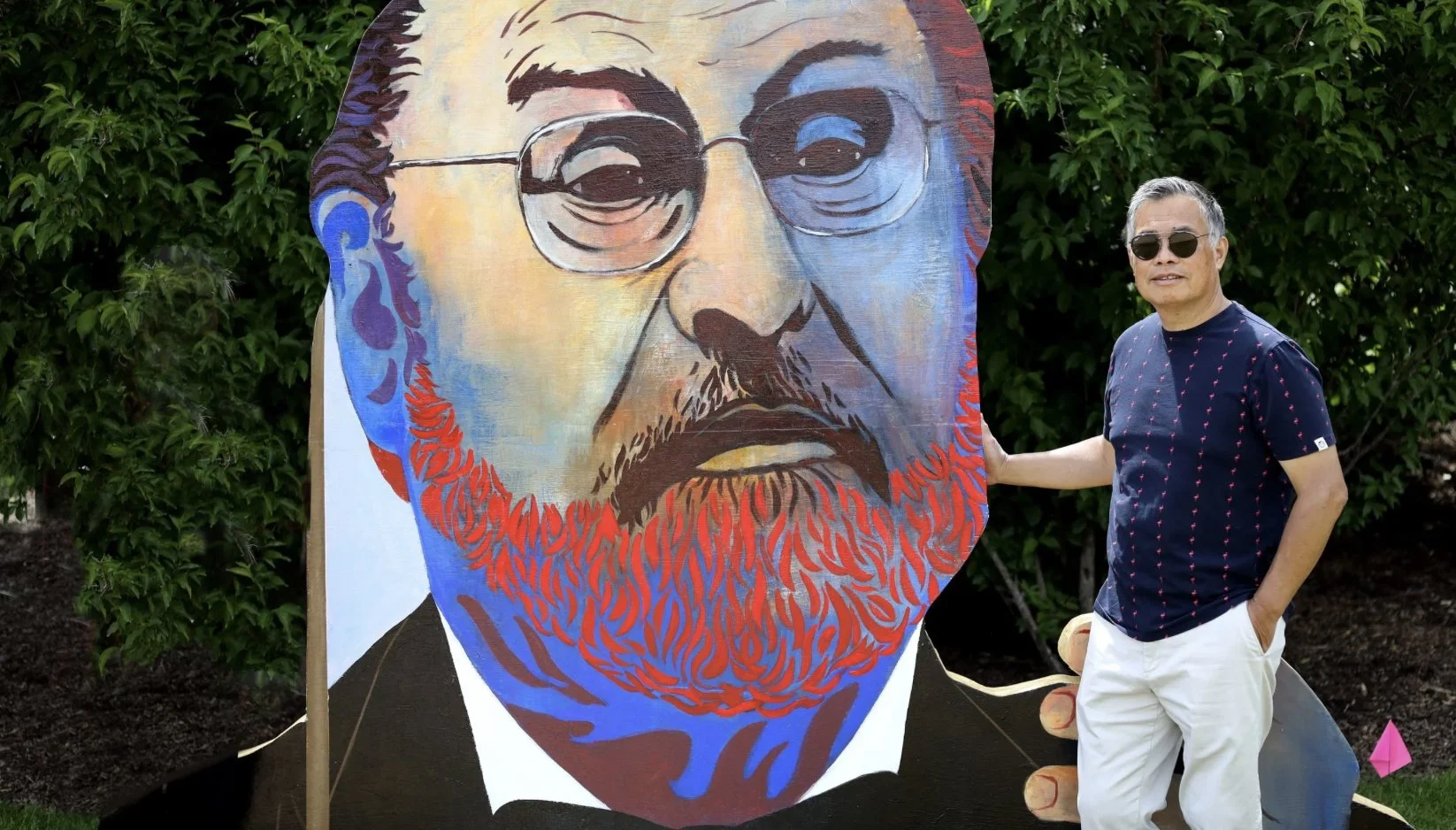
Walking with Giants Cleve Carney Museum of Art
In honor of the United States’ 250th anniversary, the McAninch Art Center and Cleve Carney Museum of Art, in association with the College of DuPage Foundation, present Walking With Giants, a free, outdoor, walkable exhibition celebrating American artistic achievement.
Mural at CAMOC
Medium: acrylic on exposed brick.
In June 2022, I painted a mural on the west wall of the Chinese American Museum of Chicago, featuring a vivid depiction of Chinese Opera. The mural showcases three prominent figures:
Sun Wukong, the Monkey King, who was born from a stone and gained supernatural powers through Taoist practices. He stands on the left, embodying both strength and wisdom.
Mu Guiying, a legendary heroine from the Northern Song Dynasty, positioned in the center. Renowned for her role in the Generals of the Yang Family legends, she represents courage and leadership.
Guan Gong, a revered military general who served under the warlord Liu Bei during the late Eastern Han Dynasty, is featured on the right. His image symbolizes loyalty and honor.
Each figure contributes to a rich tapestry of Chinese cultural heritage, celebrating their unique stories and enduring legacies.
See more
https://www.artclicker.com/camocmural

Waves of DuPage Public Art
Medium: Digital
This project invites each city in DuPage County to submit one or more of their iconic landmarks, reimagined in the traditional Ukiyo-e art style. These illustrations will be used to promote and celebrate the unique character and beauty of each city, blending the rich cultural history of DuPage with the timeless elegance of Japanese art.
See more https://www.artclicker.com/wavesofdupage

US Bank Chinatown
Medium: acrylic print
Installation at US Bank located at 2131 S China Place, Chicago

Father’s Chinese Opera
Medium: Children’s books, fiction
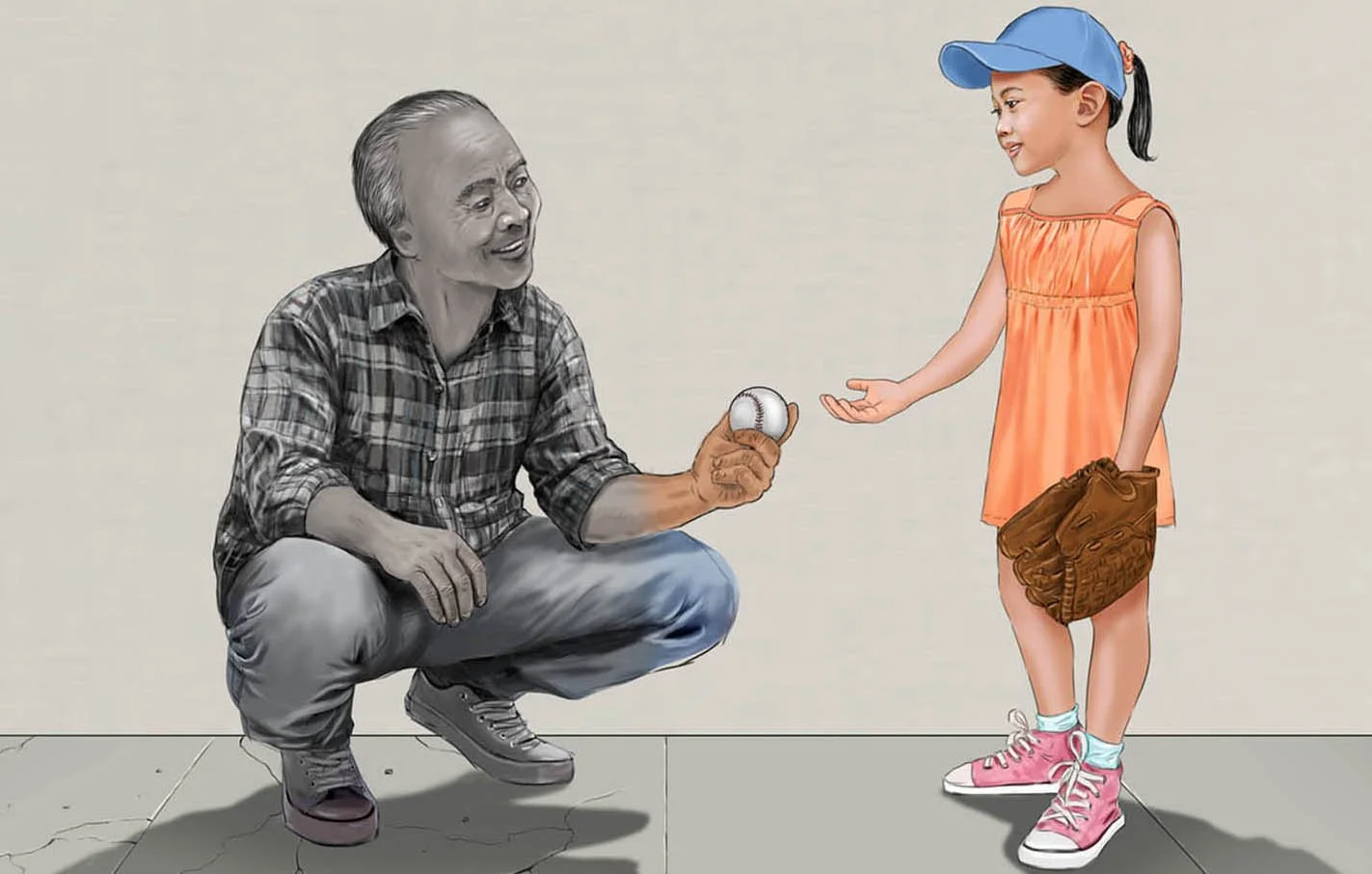
Father’s Chinese Opera was chosen as the honor title for the 2014-2015 Asian/Pacific American Award for Literature in the Picture Book Category.
It is a story is loosely based on Rich’s childhood experience in Hong Kong. The book features brilliant color illustrations along with simple and poignant text. It points out that a boy’s dreams can be realized with commitment and determination.

New Year
Medium: Children’s books, fiction
New Year tells the story of a boy struggling to fit in after immigrating to the United States. When his teacher assigns an art project, he draws on his memories of celebrating Chinese New Year in Hong Kong. His artwork sparks a class project that enables him to share his cultural heritage with his new classmates. This project also encourages another Chinese student, who had been reluctant to translate for him, to engage and contribute.

Chinese Kite Festival
Medium: Children’s books, fiction
Chinese Kite Festival is a beautifully illustrated book featuring kites that resemble various animals from China. Inspired by Tyrus Wong’s iconic kites, this book is presented in both English and Mandarin.


Chinese New Year Colors
Medium: Children’s books, fiction
Chinese New Year Colors is a simple book with bold color illustrations. Each spread focuses on a particular color, giving the name in both Chinese and English, and showcasing a traditional part of the New Year celebration-from paper fans to lion dances.
1-2-3 Dim Sum
Medium: Children’s books, fiction
123 Dim Sum is an engaging bilingual counting book that uses Chinese food items to teach numbers. This delightful book helps children learn to count in both English and Mandarin.
